9장 - 반복자 패턴과 컴포지드 패턴
- Created
- 2022년 9월 3일 PM 8:30
반복자 패턴 (Iterator Pattern)#
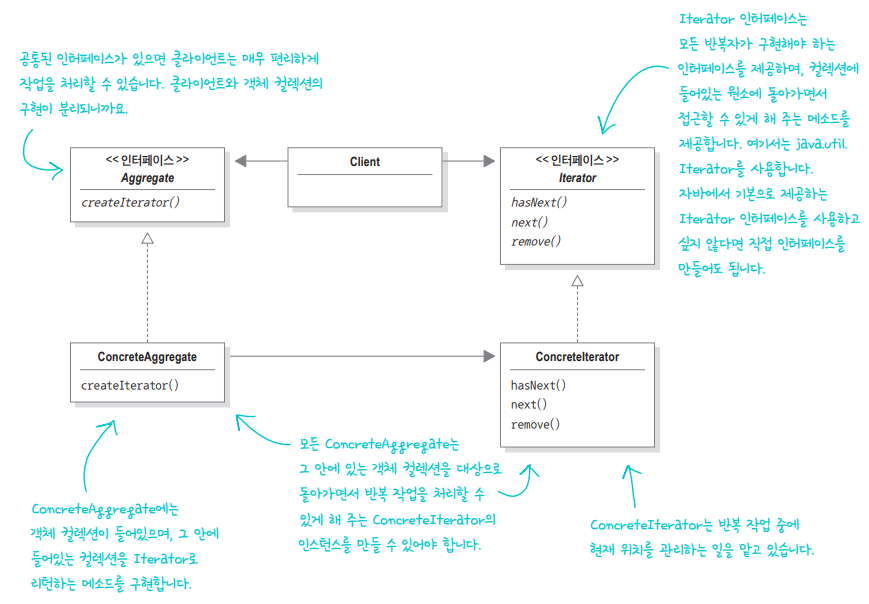
- 반복자 패턴은 컬럭션의 구현 방법을 노출하지 않으면서 집합체 내의 모든 항목에 접근하는 방법을 제공하는 패턴
- 이 패턴을 사용하면 집합체 내에서 어떤 식으로 일이 처리되는지 전혀 모르는 상태에서 그 안에 들어있는 모든 항목을 대상으로 반복 작업을 수행할 수 있음
- 반복자 패턴을 사용하면 모든 항목에 일일이 접근하는 작업을 컬럭션 객체가 아닌 반복자 객체가 맡게 됨
- 집합체의 인터페이스와 구현이 간단해지고 집합체 반복 작업에서 손을 떼고 원래 자신이 할 일에만 전념할 수 있음
단일 역할 원칙#
- 어떤 클래스가 바뀌는 이유는 하나뿐이어야 한다.
- 클래스를 고치는 일은 최대한 피해야 함
- 코드를 변경할 만한 이유가 2가지나되면 그 만큼 그 클래스를 고쳐야할 가능성이 커지며 디자인에 있어서 2가지 부분에 영향을 미치게 됨
객체마을 식당 메뉴에 반복자 추가하기#
- 객체마을 식당과 팬케이크 하우스가 합병되어 메뉴 구현항목이 서로 다르다는 문제점이 발생
- 한쪽은 배열로, 한쪽은 ArrayList 컬렉션을 사용 함
java
public interface Iterator {
		boolean hasNext();
		MenuItem next();
}

public interface Menu {
		Iterator createIterator();
}java
public class DinerMenuIterator implements Iterator {
		MenuItem[] items;
		int position = 0;

		public DinerMenuIterator(MenuItem[] items) {
				this.items = items;
		}

		public MenuItem next() {
				MenuItem menuItem = items[position];
				position = position + 1;
				return menuItem;
		}

		public boolean hasNext() {
				if (position >= items.length || items[position] == null) {
					return false;
				} else {
					return true;
				}
		}
}java
public class DinerMenu implements Menu {
		static final int MAX_ITEMS = 6;
		int numberOfItems = 0;
		MenuItem[] menuItems;

	  // 생성자

		// addItem 호출

		@Override
		public Iterator createIterator() {
				return new DinerMenuIterator(menuItems);
		}

		// 기타 메뉴 관련 메소드
}java
public class Waitress {
		...
		private void printMenu(Iterator iterator) {
				while (iterator.hasNext()) {
						MenuItem menuItem = iterator.next();
						System.out.print(menuItem.getName() + ", ");
						System.out.print(menuItem.getPrice() + " -- ");
						System.out.println(menuItem.getDescription());
				}
		}
		...
}Iterable 인터페이스 알아보기#
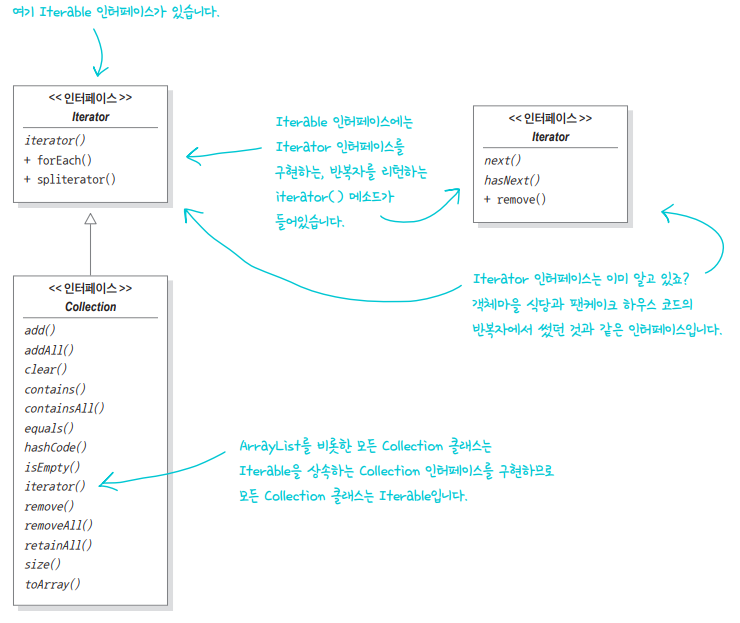
- 어떤 클래스에서 Iterable을 구현한다면 그 클래스는 iterator() 메소드를 구현해야 함
- 그 메소드는 Iterator 인터페이스를 구현하는 반복자를 리턴함
- 이 인터페이스에는 컬렉션이 있는 항목을 대상으로 반복 작업을 수행하는 방법을 제공하는 forEach() 메소드가 기본으로 포함 됨
- 자바는 향상된 for 순황문으로 몇 가지 편리한 문법적 기능을 제공함
java
public class Waitress {
		...
		private void printMenu(Iterator iterator) {
				for (MenuItem item : iterator) {
						System.out.print(menuItem.getName() + ", ");
						System.out.print(menuItem.getPrice() + " -- ");
						System.out.println(menuItem.getDescription());
				}
		}
		...
}컴포지트 패턴 (Composite)#
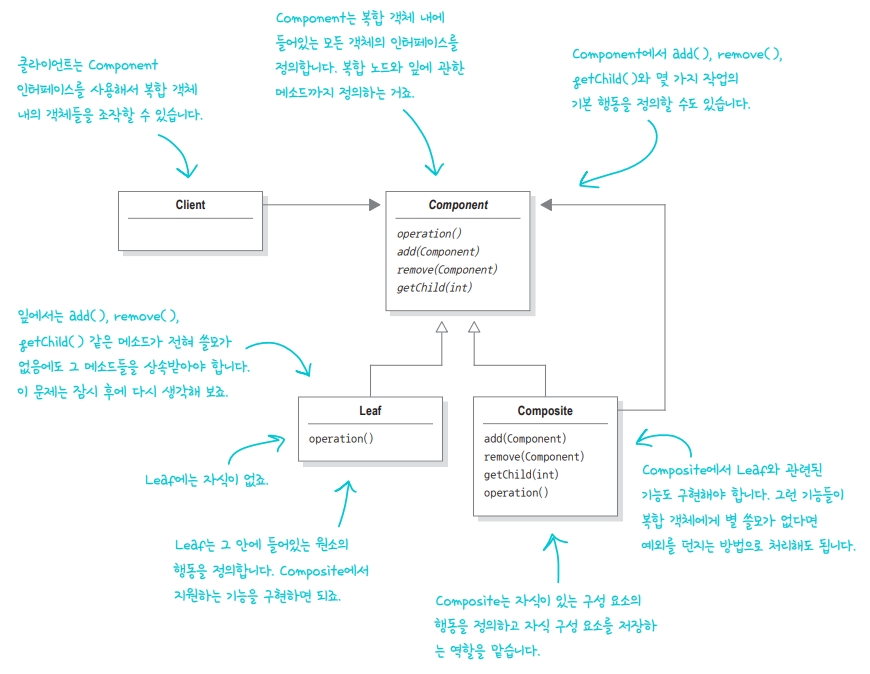
- 컴포지트 패턴으로 객체를 트리구조로 구성해서 부분-전체 계층구조를 구현합니다.
- 컴포지트 패턴을 사용하면 클라이언트에서 개별 객체와 복합 객체를 똑같은 방법으로 다룰 수 있음
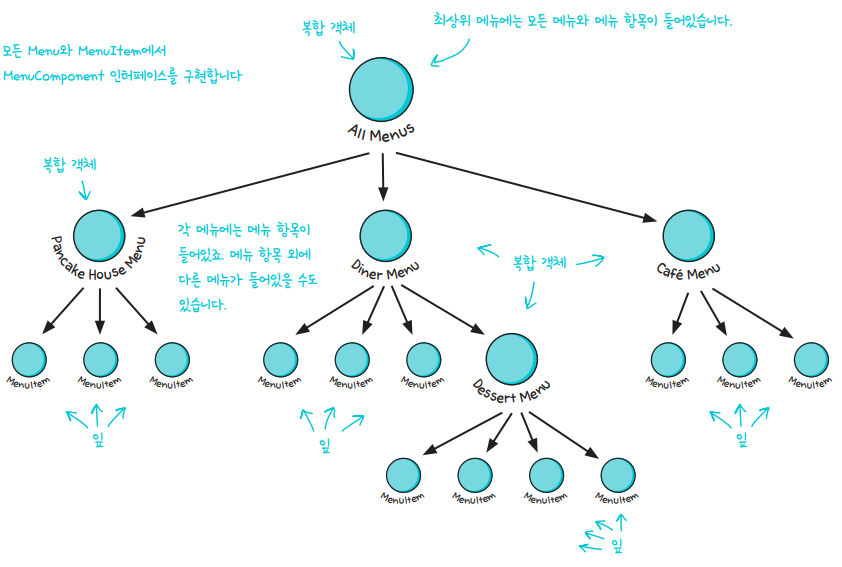
- 메뉴와 항목을 같은 구조에 넣어서 부분-전체 계증 구조를 생성할 수 있음
- 컴포지트 패턴을 사용하면 객체의 구성와 개별 객체를 노드로 가지는 트리 형태의 객체 구조를 만들 수 있음
- 이런 복합구조를 사용하면 복합 객체와 개별객체를 대상으로 똑같은 작업을 적용할 수 있음
- 즉, 복합 객체와 개별 객체를 구분할 필요가 거의 없어짐
java
public abstract class MenuComponent {
		public void add(MenuComponent menuComponent) {
				throw new UnsupportedOperationException();
		}
		public void remove(MenuComponent menuComponent) {
				throw new UnsupportedOperationException();
		}
		public MenuComponent getChild(int i) {
				throw new UnsupportedOperationException();
		}

		public String getName() {
				throw new UnsupportedOperationException();
		}
		public String getDescription() {
				throw new UnsupportedOperationException();
		}
		public double getPrice() {
				throw new UnsupportedOperationException();
		}
		public boolean isVegetarian() {
				throw new UnsupportedOperationException();
		}

		public void print() {
				throw new UnsupportedOperationException();
		}
}java
public class MenuItem extends MenuComponent {
		String name;
		String description;
		boolean vegetarian;
		double price;

		public MenuItem(String name,
		                String description,
		                boolean vegetarian,
		                double price)
		{
				this.name = name;
				this.description = description;
				this.vegetarian = vegetarian;
				this.price = price;
		}

		public String getName() {
				return name;
		}

		public String getDescription() {
				return description;
		}

		public double getPrice() {
				return price;
		}

		public boolean isVegetarian() {
				return vegetarian;
		}

		public void print() {
				System.out.print("  " + getName());
				if (isVegetarian()) {
						System.out.print("(v)");
				}
				System.out.println(", " + getPrice());
				System.out.println("     -- " + getDescription());
		}
}java
public class Menu extends MenuComponent {
		ArrayList<MenuComponent> menuComponents = new ArrayList<MenuComponent>();
		String name;
		String description;

		public Menu(String name, String description) {
				this.name = name;
				this.description = description;
		}

		public void add(MenuComponent menuComponent) {
				menuComponents.add(menuComponent);
		}

		public void remove(MenuComponent menuComponent) {
				menuComponents.remove(menuComponent);
		}

		public MenuComponent getChild(int i) {
				return (MenuComponent)menuComponents.get(i);
		}

		public String getName() {
				return name;
		}

		public String getDescription() {
				return description;
		}

		public void print() {
				System.out.print("\n" + getName());
				System.out.println(", " + getDescription());
				System.out.println("---------------------");
				// 재귀적으로 자신의 메뉴 정보를 출력
			  for (MenuComponent menuComponent : menuComponents) {
						menuComponent.print();
				}
		}
}
java
public class Waitress {
		MenuComponent allMenus;

		public Waitress(MenuComponent allMenus) {
				this.allMenus = allMenus;
		}

		public void printMenu() {
				allMenus.print();
		}
}